When our bodies are under stress our cells become destabilized by Free Radicals. Think of Free Radicals as negative charges that are attacking a healthy cell. Our bodies counteract these free radicals by producing antioxidants which attack these free radicals. Unfortunately during the release of antioxidants, MORE free radicals are released.
For this reason it is important that our diets contain a sufficient amount of antioxidants to help protect our bodies from the damage that free radicals inflict on our cells.
When we exercise we are placing stress on our cells and it is only through proper rest and nutrition that we can build our cells stronger than they were before.
Vitamin A, C, E and a mineral called Selenium are all very high in antioxidants. There are others which include Co-enzyme Q10, grape seed extract and green tea which have high amounts of antioxidants.
Foods such as blueberries, strawberries, kiwis and tomatoes are also high on this list.
Unfortunately many of the foods we eat are not of the best quality and therefore a good multivitamin is recommended to ensure that we are getting the proper amounts of these and other key vitamins and minerals in our system. Runners, because we put ourselves through so much physical stress, are especially in need of a good multivitamin.
For information on what supplements are right for YOU contact me.
Greg
Wednesday, March 15, 2006

Saturday, February 18, 2006
240/42 How I became a Sports Nutritionist
240/42!
These two numbers represented my largest body weight and pant size when I was 15 years old.
When I finally decided to lose weight I had no idea of what a calorie was or even what healthy eating was. My father was diagnosed with Diabetes and was told that in order to control his disease he needed to lose weight. I remember watching him weigh his food daily to make sure he was getting the proper amount of carbohydrates, proteins and fats. The food he was eating was lots of fruits, vegetables, lean proteins with moderate fat and he was able to lose weight while doing very little exercise.
At 15 I was heavily involved in sports such as hockey and football, however, because of my weight I was unable to compete at the level I wanted to. I was constantly teased in grade school and used food to help distract me from my pain. I hated my body and realized that I needed to do something about it, and soon. I decided to follow what my father was doing. This helped me lose some weight.
However, the weight did not come off fast enough for me with diet alone and so I exercised daily for at least 3 hours. As the weight started to come off I still wasn't satisfied. This, as I later learned, was the beginning of my eating disorder. I was able to lose about 60 pounds over the course of one summer vacation and returned to school weighing 180 pounds. While my classmates and teachers continued to congratulate me on what I had accomplished, each time I looked into the mirror I still wasn't happy with what I saw. For those of you who have an eating disorder, I'm sure you can relate to this. I used exercise, purging, fad diets, sweat suits and laxatives to try to shed more weight. This led to some weight loss but eventually the weight went back up. I realized that exercise was what I needed to do in order to keep the weight off permanently and I continued to do so daily, playing any sport I could such as football, basketball, tennis and hockey. During this time, my eating disorder was kept hidden from everyone. I would eat “junk food” from time to time but always did this alone so nobody would see me. I managed to get through High School without too much difficulty and my eating disorder was unconsciously put on the back burner for the time being.
After finishing High School, I went to College to study Recreation Management, and then on to University where I received my BSc. in Nutritional Science. Along the way I studied Sports Nutrition from the Canadian Health Food Association and uncovered the many flaws in the Canada Food Guide approach to healthy eating. I did not want to become a Dietician—after all, Dieticians believed in the flawed Canada Food Guide. Instead, I developed my own nutritional program based on trial and error, research, as well as some elements garnered from some evidence-based programs I've tried in the past.
I recently started running in August of 2005 and realized what an amazing physical activity this was. It's an effective way to lose weight, but unfortunately for someone who has an eating disorder like myself, it needs to be balanced to be considered healthy. In all honestly, my commitment and passion for running has brought back some memories of my unbalanced teens. I've worked closely with many runners, including many women at the gym where I work, and have found that there are a high percentage of runners with eating disorders. I have decided to share my personal experience with an eating disorder with those whom I feel it could help, and I am compelled to write this Blog to let others know that they are not alone. For those of us who struggle with poor body image, it is all about balance.
Through my experiences with counseling alcoholics and drug addicts, I believe that eating disorders are the hardest addictions to manage and cope with. The reason for this is I cannot escape from the fact that I need to eat in order to stay alive. Addicts and alcoholics can stay away from their addictive substances and still live, but those of us who have eating disorders have to deal with food and our bodies on a daily basis. I’ve learned that my eating disorder will always be there but I can control how much time I spend thinking about it and how I am going to manage it.
Those of us who have eating disorders, recognize that we will have good and bad body image days. Our family and friends may never understand this, but it helps to talk to about it, so those of you who do suffer from this disorder, I hope you have the strength to put together a great support system.
Eating disorders are very much an isolating illness and by speaking frankly about my own issues, I hope that more of you will feel comfortable talking about this with your own family/friends.
My hope is that my story is able to help some of you realize that you can accomplish anything you put your mind to and that you need to set goals and map out a healthy plan to achieve these goals.
If you or someone you know, is suffering from an eating disorder, there are places that can help. One such organization is called Sheena's Place (http://www.sheenasplace.org/main.html) and they have group and individual counseling available.
My company will help you to not only achieve your evolving goals in a healthy and balanced approach, but will ensure you maintain your successes. For more information about how to begin, contact me at
gregdcruz@rogers.com
These two numbers represented my largest body weight and pant size when I was 15 years old.
When I finally decided to lose weight I had no idea of what a calorie was or even what healthy eating was. My father was diagnosed with Diabetes and was told that in order to control his disease he needed to lose weight. I remember watching him weigh his food daily to make sure he was getting the proper amount of carbohydrates, proteins and fats. The food he was eating was lots of fruits, vegetables, lean proteins with moderate fat and he was able to lose weight while doing very little exercise.
At 15 I was heavily involved in sports such as hockey and football, however, because of my weight I was unable to compete at the level I wanted to. I was constantly teased in grade school and used food to help distract me from my pain. I hated my body and realized that I needed to do something about it, and soon. I decided to follow what my father was doing. This helped me lose some weight.
However, the weight did not come off fast enough for me with diet alone and so I exercised daily for at least 3 hours. As the weight started to come off I still wasn't satisfied. This, as I later learned, was the beginning of my eating disorder. I was able to lose about 60 pounds over the course of one summer vacation and returned to school weighing 180 pounds. While my classmates and teachers continued to congratulate me on what I had accomplished, each time I looked into the mirror I still wasn't happy with what I saw. For those of you who have an eating disorder, I'm sure you can relate to this. I used exercise, purging, fad diets, sweat suits and laxatives to try to shed more weight. This led to some weight loss but eventually the weight went back up. I realized that exercise was what I needed to do in order to keep the weight off permanently and I continued to do so daily, playing any sport I could such as football, basketball, tennis and hockey. During this time, my eating disorder was kept hidden from everyone. I would eat “junk food” from time to time but always did this alone so nobody would see me. I managed to get through High School without too much difficulty and my eating disorder was unconsciously put on the back burner for the time being.
After finishing High School, I went to College to study Recreation Management, and then on to University where I received my BSc. in Nutritional Science. Along the way I studied Sports Nutrition from the Canadian Health Food Association and uncovered the many flaws in the Canada Food Guide approach to healthy eating. I did not want to become a Dietician—after all, Dieticians believed in the flawed Canada Food Guide. Instead, I developed my own nutritional program based on trial and error, research, as well as some elements garnered from some evidence-based programs I've tried in the past.
I recently started running in August of 2005 and realized what an amazing physical activity this was. It's an effective way to lose weight, but unfortunately for someone who has an eating disorder like myself, it needs to be balanced to be considered healthy. In all honestly, my commitment and passion for running has brought back some memories of my unbalanced teens. I've worked closely with many runners, including many women at the gym where I work, and have found that there are a high percentage of runners with eating disorders. I have decided to share my personal experience with an eating disorder with those whom I feel it could help, and I am compelled to write this Blog to let others know that they are not alone. For those of us who struggle with poor body image, it is all about balance.
Through my experiences with counseling alcoholics and drug addicts, I believe that eating disorders are the hardest addictions to manage and cope with. The reason for this is I cannot escape from the fact that I need to eat in order to stay alive. Addicts and alcoholics can stay away from their addictive substances and still live, but those of us who have eating disorders have to deal with food and our bodies on a daily basis. I’ve learned that my eating disorder will always be there but I can control how much time I spend thinking about it and how I am going to manage it.
Those of us who have eating disorders, recognize that we will have good and bad body image days. Our family and friends may never understand this, but it helps to talk to about it, so those of you who do suffer from this disorder, I hope you have the strength to put together a great support system.
Eating disorders are very much an isolating illness and by speaking frankly about my own issues, I hope that more of you will feel comfortable talking about this with your own family/friends.
My hope is that my story is able to help some of you realize that you can accomplish anything you put your mind to and that you need to set goals and map out a healthy plan to achieve these goals.
If you or someone you know, is suffering from an eating disorder, there are places that can help. One such organization is called Sheena's Place (http://www.sheenasplace.org/main.html) and they have group and individual counseling available.
My company will help you to not only achieve your evolving goals in a healthy and balanced approach, but will ensure you maintain your successes. For more information about how to begin, contact me at
gregdcruz@rogers.com
Saturday, February 04, 2006
Pre and Post Workout Nutrition
Your ability to have a great workout/run can be affected by what you eat before and after you train. Not only that, but your ability to refuel yourself after your workout will have an even greater impact on your future training sessions/runs.
Whether you train in the morning, afternoon or evening, your body relies on its main fuel system (glycogen) to give you the energy your body requires. Glycogen is our energy "bank" and it is "stocked" with glucose (blood sugar). Glucose is the simplest form of carbohydrates available to us. In order to provide our bodies with a constant flow of energy, it is better to have a carbohydrate such as oatmeal, sweet or red potatoes, berries, or whole-wheat bagels. If you don't have an hour to wait then a better choice would be some fruit such as an apple or banana. Drinking some Green Tea before your workout can also provide you with some caffeine (about 1/3 of the amount found in coffee) as well as some important antioxidants. Antioxidants will attack Free Radicals that are trying to destabilize a healthy cell.
Immediately after your training session it is very important to replenish your energy bank (Glycogen) by having some simple carbohydrates (fruits) with a little bit of protein. The ratio of carbohydrates to protein should be 4:1. A good example of this would be some low fat cottage cheese with some grapes. Protein shakes, as long as some fruit is added to them, can also be a good choice. It is more important to have carbohydrates after a training session than protein.
At Body For You, I will customize a pre and post workout nutrition plan that will enhance your training and allow you to train more effectively with greater results.
Email me and get started today!
gregdcruz@rogers.com
Whether you train in the morning, afternoon or evening, your body relies on its main fuel system (glycogen) to give you the energy your body requires. Glycogen is our energy "bank" and it is "stocked" with glucose (blood sugar). Glucose is the simplest form of carbohydrates available to us. In order to provide our bodies with a constant flow of energy, it is better to have a carbohydrate such as oatmeal, sweet or red potatoes, berries, or whole-wheat bagels. If you don't have an hour to wait then a better choice would be some fruit such as an apple or banana. Drinking some Green Tea before your workout can also provide you with some caffeine (about 1/3 of the amount found in coffee) as well as some important antioxidants. Antioxidants will attack Free Radicals that are trying to destabilize a healthy cell.
Immediately after your training session it is very important to replenish your energy bank (Glycogen) by having some simple carbohydrates (fruits) with a little bit of protein. The ratio of carbohydrates to protein should be 4:1. A good example of this would be some low fat cottage cheese with some grapes. Protein shakes, as long as some fruit is added to them, can also be a good choice. It is more important to have carbohydrates after a training session than protein.
At Body For You, I will customize a pre and post workout nutrition plan that will enhance your training and allow you to train more effectively with greater results.
Email me and get started today!
gregdcruz@rogers.com
Monday, January 30, 2006
The "science" behind effective weight loss
So many of us are concerned with weight loss but not enough of us are aware of how this is accomplished.
There is a science that must be applied on a consistent basis in order for us to lose weight. Weight loss occurs when are energy expenditure is greater than our food intake. However, too much of negative energy "balance" can cause a loss in muscle tissue and NOT unwanted body fat. Once I calculate your Resting Metabolic Rate (RMR) I then have to look at where else you are burning calories from (exercise, work, etc.) Your RMR is the amount of calories your body needs in one 24 period while at REST. Each of us have a unique RMR and this is based on your age, height, weight, sex, and body fat%.
There is 3,500 calories in 1 pound of body fat. In order to create an energy "deficit" I have to reduce the amount of calories by 500 per day (500 X 7= 3500) which amounts to a weight loss of 1 pound. In order to lose another pound per week you need to exercise enough to burn at least 500 calories. This can be accomplished by as little as 40 minutes of high intensity cardiovascular training or weight training.
At Body For You, I take all the "guess work" away from you and will develop a plan suited to meet your unique needs.
To get started please email me:
gregdcruz@rogers.com
There is a science that must be applied on a consistent basis in order for us to lose weight. Weight loss occurs when are energy expenditure is greater than our food intake. However, too much of negative energy "balance" can cause a loss in muscle tissue and NOT unwanted body fat. Once I calculate your Resting Metabolic Rate (RMR) I then have to look at where else you are burning calories from (exercise, work, etc.) Your RMR is the amount of calories your body needs in one 24 period while at REST. Each of us have a unique RMR and this is based on your age, height, weight, sex, and body fat%.
There is 3,500 calories in 1 pound of body fat. In order to create an energy "deficit" I have to reduce the amount of calories by 500 per day (500 X 7= 3500) which amounts to a weight loss of 1 pound. In order to lose another pound per week you need to exercise enough to burn at least 500 calories. This can be accomplished by as little as 40 minutes of high intensity cardiovascular training or weight training.
At Body For You, I take all the "guess work" away from you and will develop a plan suited to meet your unique needs.
To get started please email me:
gregdcruz@rogers.com
Wednesday, January 18, 2006
How to keep yourself motivated through those tough times

Now that you have made the commitment to a healthy lifestyle it is important to have "mini goals" to keep you focused. When I talk to my clients about motivation, many of them look too far into the future instead of creating small goals along the way.
These goals can be as simple as getting into a smaller pant or shirt, being able to run farther and faster without stopping, and or being able to lift more weights than they could before.
Once these mini goals are accomplished you can celebrate the accomplishment and then set another goal to work towards.
I often tell my clients to hang up a smaller size pant in their room so they can see it everyday when they wake up. As the temptations grow to fall back into old habits of eating, I tell them to think about those pants and ask themselves if they are getting closer or farther away from wearing those pants by the food choices they are making.
Whatever you choose to use as motivation, don't forget to make it your OWN. In the beginning you will find that you will get encouragement from almost everyone you meet. However, as the days and weeks progress these same people will not be there to lend you support as your improvement only reinforces their own unhealthy food choices. It is this time that you must rely on yourself to stay focused and motivated to complete your goals.
Good luck!
gregdcruz@rogers.com
Monday, January 02, 2006
New Year.........New Goals!!
The start of a New Year is the time to reflect on past accomplishments and look forward to realizing new goals. For some, this will include losing a few pounds, competing in a new race or beating a personal best time in a 1/2 or full marathon.
Why is Nutrition so important in helping you achieve these and other goals? Ask yourself how often you lift weights or run per week. Then ask yourself how often you eat per week. Get the picture?
In order to determine what you need to be eating you first must learn what you are currently eating.
Body For You will determine not only what you need to eat now but what changes you will have to make in order for you to not only achieve your goals but surpass them.
Don't be fooled by quick fixes as these do not work long-term.
Get started TODAY by contacting me at:
gregdcruz@rogers.com
Why is Nutrition so important in helping you achieve these and other goals? Ask yourself how often you lift weights or run per week. Then ask yourself how often you eat per week. Get the picture?
In order to determine what you need to be eating you first must learn what you are currently eating.
Body For You will determine not only what you need to eat now but what changes you will have to make in order for you to not only achieve your goals but surpass them.
Don't be fooled by quick fixes as these do not work long-term.
Get started TODAY by contacting me at:
gregdcruz@rogers.com
Tuesday, December 06, 2005
Carbohydrates are a Runners BEST friend!
Yes, that's right! Forget what you have been told by the High Protein Diets. As a runner you need to make sure that your energy "bank" (Glycogen) is fully loaded and ready to provide you with the energy necessary to complete those long distance races.
If you don't have enough Glycogen then your body will have to rely on less efficient energy sources (Fat and Protein) and if that's the case then you will be at a competitive disadvantage. Why waste all that great training because you are unsure about what to eat leading up to a race?
Body for You will determine the proper amount of carbohydrates, proteins and fats that your body needs in order to get the most out of your training.
Get started TODAY!
Package Deal ($100.00) Analysis of 3-day diet, 1-week meal plan and 2 pounds of high quality protein. This also includes regular emails and 1 adjustment to the meal plan 2 weeks later.
Analysis and 1 week Diet ($75.00). This also includes regular emails and 1 adjustment to the meal plan 2 weeks later.
If you don't have enough Glycogen then your body will have to rely on less efficient energy sources (Fat and Protein) and if that's the case then you will be at a competitive disadvantage. Why waste all that great training because you are unsure about what to eat leading up to a race?
Body for You will determine the proper amount of carbohydrates, proteins and fats that your body needs in order to get the most out of your training.
Get started TODAY!
Package Deal ($100.00) Analysis of 3-day diet, 1-week meal plan and 2 pounds of high quality protein. This also includes regular emails and 1 adjustment to the meal plan 2 weeks later.
Analysis and 1 week Diet ($75.00). This also includes regular emails and 1 adjustment to the meal plan 2 weeks later.
Saturday, December 03, 2005
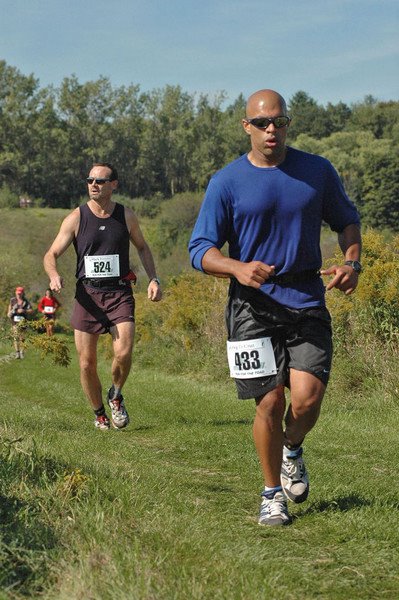
Be a Leader NOT a follower!
There are new "diets" popping up everywhere and they all promise quck results. Don't fall into this trap! To achieve and MAINTAIN your goals, you need to find the proper balance between nutrition, exercise and rest. Body for You will show you how to modify your eating so that it fits into YOUR lifestyle.

Friday, December 02, 2005
How to get started?
If you are serious about getting professional nutritional counseling then what I need you to do is to record what you are eating for a period of 3 days (2 weekdays plus 1 weekend). Once this is completed then please email this information so I can analyze your current eating pattern.
I will determine what changes need to be made in order for you to reach your goals.
The price for the analysis, a 1 week meal plan and a 2 pound tub of high quality protein powder is $100.00
For more information, please email me.
I will determine what changes need to be made in order for you to reach your goals.
The price for the analysis, a 1 week meal plan and a 2 pound tub of high quality protein powder is $100.00
For more information, please email me.
Subscribe to:
Posts (Atom)

